Wahid “Source One” Khoshravani
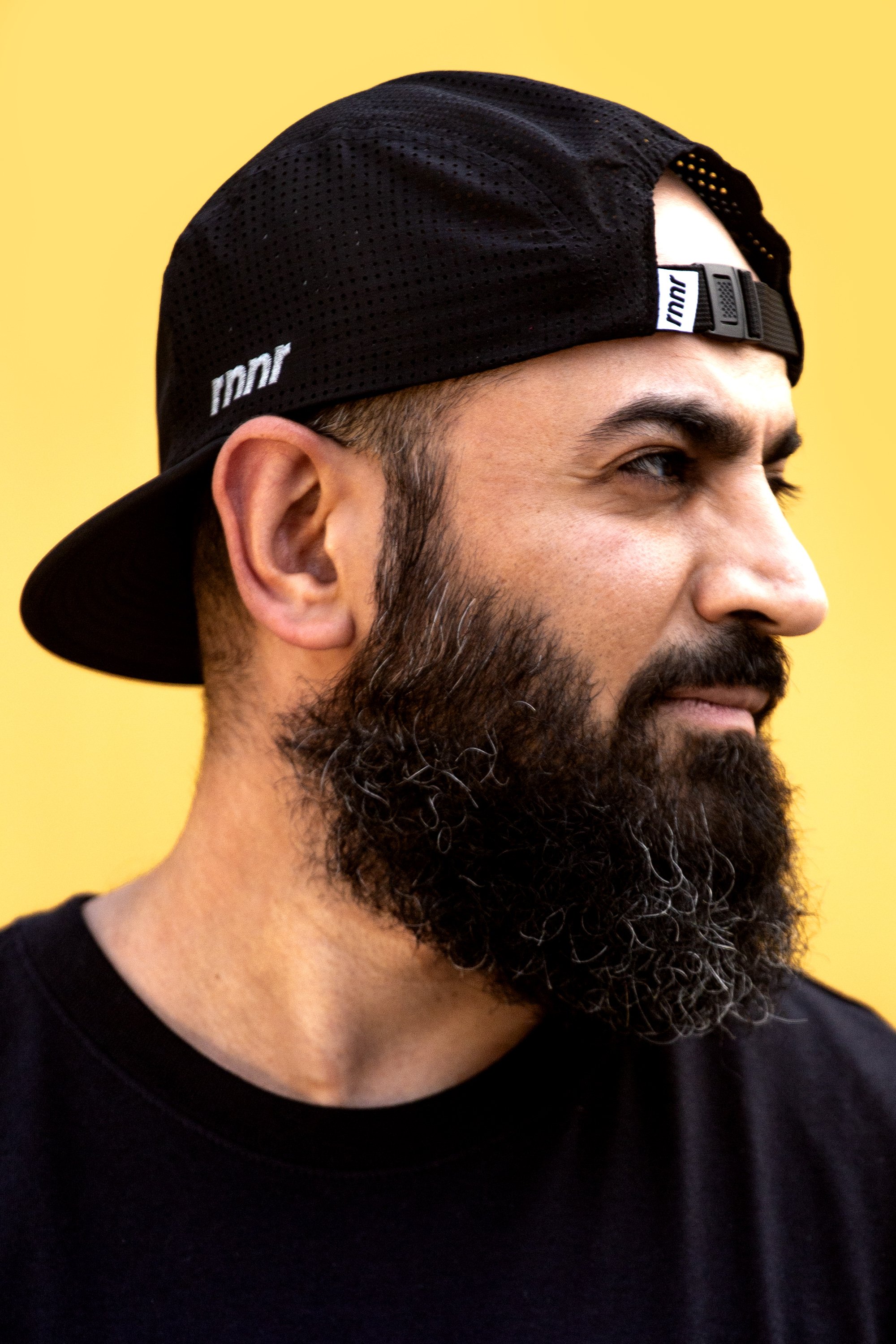
Wahid—better known as Source One—is one of Soul Food Cyphers’ cornerstone DJ’s and founders. He’s spent his life living the culture from every angle—DJing, b-boying, tagging and MCing. Like few others, he’s seen people from completely different walks of life across the globe find common ground in Hip Hop and has spent his life working to bring people together. Many voices. One beat. Different stories. One Source.
Born in Shiraz, Iran, Source One was raised between Turkey, Germany, and the U.S. In Europe, breakdancing was everywhere—house parties became dance floors, Soul Sonic Force played through the speakers, and learning to break was simply part of growing up. Graffiti was big too. Then Wu-Tang Clan’s Enter the Wu-Tang (36 Chambers) arrived. Raekwon and Ghostface Killah became superheroes, even father figures, for a boy whose own father lived in another country.
A cousin in the U.S. sent him mixtapes filled with New York Hip Hop like Mobb Deep. When that cousin began DJing in Atlanta, Wahid tagged along to record stores, where his love for crate digging began. By high school, he was making beats, chopping strange samples and drum patterns, and freestyling with his cousin in parking lots and car rides.
But high school was also when Wahid was wrestling with a bigger question: Who am I?
Searching for an answer, he studied different philosophies and world religions, looking at the ways people across cultures understood existence. What he came to believe was that beneath all the differences in culture, thinking, and experience, there is something that connects us all—that, in the end, we all come from one source.
The idea stayed with him as he adopted the name Source One.
Then, during his junior year, he met Alex “Cost One” Acosta.
It started with a freestyle battle outside during lunch. Source was battling another student when the kid, realizing he was losing, called Alex over. Alex jumped in. They traded bars until the bell rang and the other student walked away. Before they parted, Source asked Alex a simple question:
“Who do you listen to?”
That Friday, they recorded a freestyle on Alex’s computer. After that, they were together almost every other day—riding around freestyling, making music, DJing, going to breakdance battles and Hip Hop shows.
There was something unusual about the group forming around them. Wahid was Persian. Alex was Black. Their friend Austin was a white kid from Colorado. Three teenagers from completely different backgrounds, all connected through Hip Hop. Their friendship stood in stark contrast to the often homogeneous spaces they found themselves in.
After high school, Source dove deeper into the culture. He DJ’d events, made beat tapes and albums, got heavily into graffiti, collaborated with underground MCs, and covered the local scene as a journalist in Little Five Points. His musical world was just as diverse as his upbringing—Turkish rock, Persian psychedelic music, Brazilian bossa nova, New York Hip Hop, underground rap, and anything else that caught his ear.
Eventually, he moved to Edgewood, just a couple of blocks from Martin Luther King Jr.’s former home—and became neighbors with Alex.
One day, Alex came over with a question.
“Remember how we used to say we wanted a place to go freestyle that wasn’t just the parking lot or the car? We got this place called WonderRoot. You wanna be a part?”
And from that simple invitation came Soul Food Cypher.
Markmount made the flyer and the rest was history.
The idea was born from something both of them had already experienced. In high school, freestyle battles often became less about the bars and more about negativity. They wanted to create something different—a community where people could compete, create, and express themselves without tearing each other down.
At its core, it boiled down to one thing: respect. Respect yourself. Respect everyone around you.
When Soul Food Cypher began, Source One helped shape the circle. He developed freestyle games and event segments and contributed as a promoter and organizer. But first and foremost, he became one of the cypher’s original DJs.
At the time, Source was also trying to establish himself in Atlanta’s DJ scene. SFC gave him a place to play the music he couldn’t necessarily play in clubs—the strangest beats he could find, records that didn’t fit neatly into a genre, and sounds he simply wanted to explore. He could experiment in front of a crowd and immediately know what was working.
That immediacy is what Source loves about DJing. As a producer, you might spend hours making something without knowing how people will respond. As a DJ, the feedback is instant. People dance. They move. They react. You control the atmosphere of an entire room, and when you bring people together around music, there’s a feeling that’s hard to replicate.
Over time, Soul Food Cypher became a home for other DJs looking for that same kind of outlet. It wasn’t about having the biggest stage or the most resources. It was about creating a space where people could express themselves freely, experiment, and connect.
Source saw the clearest example of that at one of SFC’s Edgewood block parties.
The event took place on a street known for robberies and trouble. There wasn’t a massive budget or production company behind it. There was basketball, music, DJs, MCs, and people from different backgrounds. Toward the end of the night, as the sun began to go down, Source looked out at the crowd. There were families. Kids were running around. Someone was selling bubble machines, and children were blowing bubbles through the crowd.
And there was no violence.
He took in the moment and thought to himself, “We did it.”
For Source, the scene felt like a modern echo of the Cool Herc block parties where Hip Hop began in the Bronx—people from different backgrounds taking whatever they had and creating something special together.
That experience reflects something Source One has always loved about Hip Hop: the mix. He doesn’t gravitate toward homogeneous spaces. He likes looking around a room and seeing people who might not otherwise have any reason to be there together.
Over the years, he has watched Persian, Black, white, Latino, Asian, Filipino, and mixed artists walk into the cypher. Older generations share space with younger ones. Artists from different cities and musical backgrounds trade verses, beats, stories, and ideas.
For Source, that is Hip Hop’s oral history —not just the famous names preserved in books, but the people whose stories can easily be overlooked. The culture lives through the people who carry it, teach it, reinterpret it, and pass it on.
Source One has watched that tradition carry on through Soul Food Cypher and the MCs he’s watched develop and grow—and now, he’s watching it take root in his own family.
His son, affectionately known around the cypher as Source 1½ or Source 2, loves the cypher. When his dad is DJing, he’s been known to grab the microphone and spit a few bars himself. At a recent Busta Rhymes show, he sat on his dad’s shoulders, completely losing his mind as Busta performed—sharing the same love that has shaped his father’s life. Source bought him his own DJ controller and production setup, and now the two freestyle at home, trading bars and trying to top one another.
For years, Hip Hop’s pioneers were a kind of father figure for Source when his own father lived in another country. Now, he gets to pass a shared love and inheritance forward—not just through music, but through the idea that has guided him since he was young: we may come from different places, cultures, and beliefs, but we are more connected than we are different.
That idea is at the heart of everything Source One does. It’s in the music he plays, the people he brings together, the cypher he helped build, and now, in what he gets to share with his son.
Maybe that’s what Source One has always meant.
Not one sound, one culture, or one way of seeing the world. But the place where all those things meet. The Persian kid from Shiraz, the Black kid from Atlanta, the white kid from Colorado. The old heads and the next generation. The DJ, the MC, the b-boy, the writer, the father, the son.
Different voices.
Different stories.
One Source.