Truth
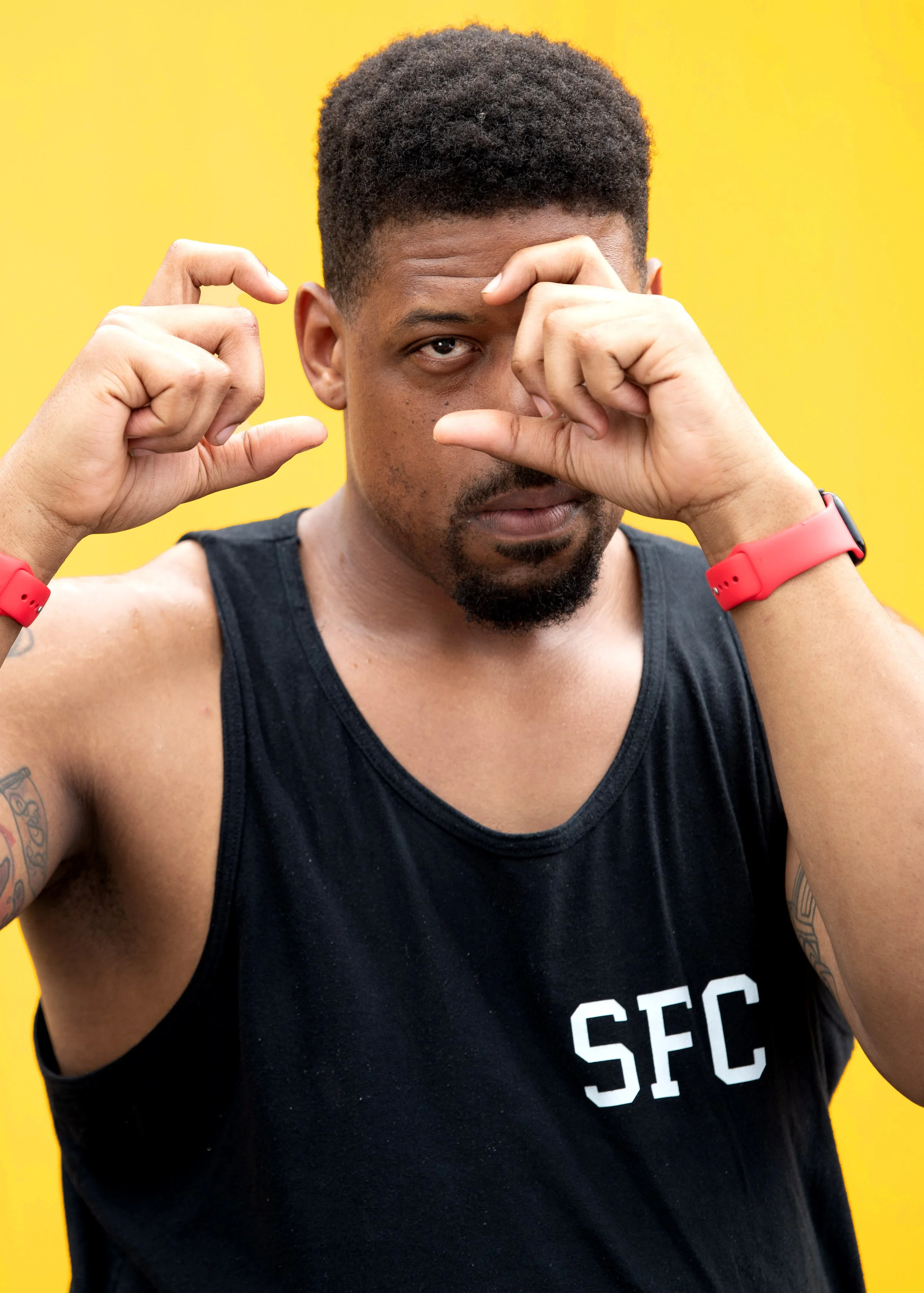
Anthony “Truth” Gary is a true historian of the cypher. Behind the lens of his camera, he has documented nearly every era of the cypher—from its earliest days to the community it has become today—capturing not only unforgettable moments, but the truth of the people inside the circle. At the same time, he has been writing a chapter of his own, living up to the name that has defined both his art and his life: Truth.
Truth still lives just down the street from his childhood home. Born and raised in Atlanta's historic West End, his roots run deep in the city's Black educational and spiritual traditions. His father attended Morehouse, his mother attended Spelman, and as a minister, she filled his childhood with the sounds of gospel music. "I was the son of a preacher," Truth recalls. "When I was young, we'd hear R&B and rap on V-103 in the car. But after about eight years old, it was mostly gospel—Chicago Mass Choir and church music."
While Atlanta's crunk movement exploded around him, Truth found himself drawn elsewhere. Growing up, he caught glimpses of the city's emerging scene—he remembers seeing the Ying Yang Twins hanging around a friend's house long before they became household names. But digging through his older brother's CD collection introduced him to The Roots, Wu-Tang Clan, The LOX, and other lyric-driven artists. Above all, one voice stood above the rest. "Black Thought is my favorite MC," he says. "He'd make me stop and ask, 'What did he just say?' Then I'd have to go research it."
That curiosity became foundational. He recorded his first rap in middle school, wrote poetry throughout his teenage years, and became captivated by freestyle after discovering battle rap legends like Eyedea and Medusa, watching 8 Mile, and collecting Smack DVDs. More than competition, he loved the challenge of creating something honest in the moment.
But his path into Atlanta's underground Hip Hop scene came through a camera before it came through a microphone. In the early 2010s, Truth began photographing and filming local artists while producing a documentary about Atlanta's underground Hip Hop culture. He felt mainstream rap had lost some of its humanity. "When snap music came out, it sounded good, but something felt missing," he says. "I wanted to see real people and real experiences."
That search eventually led him to WonderRoot, where someone suggested he check out Soul Food Cypher. He emailed founder Alex Acosta intending to simply document the gathering. Instead, he found home. "The first time I walked into Soul Food Cypher, it felt like I'd found a lost tribe," he remembers. "I was thinking, 'Where has this been my whole life?' Nobody was battling. Nobody was trying to prove they were better than anyone else. It was just people sharing."
Although he arrived with a camera, he soon stepped into the circle himself. Having stepped away from organized religion around nineteen, Truth had spent years searching for authenticity. Soul Food Cypher became the place where honesty wasn't just welcomed—it was necessary. "Soul Food Cypher was my first church as an adult," he says. "That's where I could leave my testimony. To talk to God, to the universe, or even to myself, you have to be honest."
His stage name reflects that lifelong philosophy. Inspired in part by his middle name, Rashad, which loosely translates to "truth" or "guidance," for Truth, honesty is not about claiming objective certainty. It's about confronting your own feelings, fears, and reality without hiding behind a facade. "The worst thing you can do is build a lie that people create their reality around," he says. "When you're not truthful with yourself, you end up hurting yourself and everyone around you."
Over the years, Truth has become one of Soul Food Cypher's greatest visual historians. Under the mentorship of Alex Acosta, who helped launch his photography career and sold him some of his first professional equipment, he has documented thousands of moments that define the community's history. For Truth, the work is sacred. Every photograph preserves the history and legacy of Soul Food Cypher, laying a foundation for future generations to study, celebrate, and build upon.
His photographs capture more than performances—they reveal people. Through years behind the camera, Truth has learned the movements, habits, and quiet vulnerabilities of countless MCs. He notices the MC who looks toward the sky searching for affirmation, the MC whose hands sketch invisible pictures while they rhyme, and the fleeting expressions people rarely see in themselves. "Photography taught me that everybody has a truth," he says. "Sometimes I capture something people don't even know they're doing. I can show people a version of themselves they never get to see."
While preserving the stories of others, Truth continues developing his own voice as an MC. His style blends gritty urban realism with cinematic imagery, creating verses that feel like walking through a weathered city block as a jazz score plays in the background. Influenced by literature, photography, and lyricists who challenge listeners to think more deeply, he paints scenes that invite people to step inside.
Whether behind the camera or inside the cypher, Truth continues pursuing the same mission that has shaped his life: helping people live and share their truth. Because for Truth, Soul Food Cypher is more than a place to rap. It’s family. It's history. It’s testimony. And above all, it is a place where truth is preserved, shared, and heard.